
How Twitch Clips Work as B Roll for YouTube and TikTok

Look through TikTok or YouTube Shorts, and you will see a pattern. An artist is addressing the camera, then there is a sudden flash of a clip: a gamer in response, a streamer screaming with excitement, or an insane moment on a livestream.
It lasts only a few seconds, then the main video continues. At first glance, it looks like a random insert. But behind the scenes, these clips are often pulled from Twitch. And they are not there by accident.
Twitch clips become more popular among creators to insert B-roll in the form of short visual information as an addition to the main story, adding some sense of context, humor, or reaction. It is a minor trick that radically modifies the rhythm and involvement of a video.
What is not known to the majority is that this tendency is indicative of an even greater change in the system of online content creation. Short-form storytelling has become modular.
Pieces of content travel across platforms, reshaped into new formats. A moment from a livestream becomes a reaction clip. A reaction clip becomes visual commentary. And suddenly, a three-second Twitch highlight becomes the emotional punctuation in a TikTok video.
Here’s where things get interesting. Those tiny inserts are doing far more work than most viewers realize.
The Role of B-Roll in Modern Short-Form Video
It is useful to know what B-roll actually is before getting deeper into Twitch in particular. Traditionally, B-roll is additional material in filmmaking to support the main story. In case the prime footage depicts a person speaking, the B-roll could depict images that explain the matter.
News documentaries use it constantly. But on social media, B-roll has evolved into something slightly different. Instead of simply illustrating a topic, B-roll now acts as visual punctuation. It breaks the rhythm of talking head content, adds emotional cues, and keeps viewers engaged.
Short-form platforms reward constant visual change. The attention duration on applications such as TikTok is incredibly low because users move rapidly through content feeds. According to research summarized by Zebracat, the average TikTok user watches around 92 videos per day, illustrating how quickly audiences scroll through short-form content.
That means creators must constantly reset attention. B-roll helps accomplish that. Instead of watching one static shot for 30 seconds, viewers see micro-transitions every few seconds. And that’s where Twitch clips slide perfectly into the workflow.
Why Twitch Clips Are Perfect B-Roll Material
Twitch clips are unique compared to most other video snippets on the internet. They capture unscripted reactions.
- A player fails spectacularly.
- A streamer screams in victory.
- A chat moment explodes into chaos.
These moments feel raw and authentic. They carry emotion that scripted footage often lacks, and that authenticity matters.
Social media audiences often respond strongly to genuine reactions. Research from the Pew Research Center shows that many users see social platforms as spaces for self-expression and for presenting their real identity to others, highlighting the importance of authenticity in online interactions.
That’s exactly what Twitch clips provide. They deliver emotional reactions in their purest form. Short. Unfiltered. Immediately understandable, which makes them an ideal B-roll.
Instead of explaining a reaction, creators can show it instantly. A streamer shouting in disbelief communicates more emotion than ten seconds of narration. And it takes only two seconds on screen.
The Micro-Storytelling Effect
Short-form video works best when it delivers information quickly, but there’s a catch. Viewers still crave storytelling, even in 30 seconds.
Twitch clips help bridge that gap by creating micro-stories inside larger videos. A creator might be explaining a gaming trend, for example. Instead of describing a chaotic in-game moment, they insert a Twitch clip that demonstrates it.
The viewer instantly understands. No extra explanation needed. And this is where things get interesting. A single Twitch clip can function as:
- A reaction shot
- A comedic beat
- A visual example
- An emotional cue
All within three seconds. That kind of storytelling compression is extremely powerful. It allows creators to build layered narratives inside short videos.
The Rhythm Advantage in Social Video
Short-form platforms reward pacing. Fast pacing. But pacing isn’t just about speed. It’s about rhythm. Great creators constantly change visual stimuli.
- Talking
- Cutaway
- Text overlay
- Reaction clip
Then back again. Twitch clips work beautifully in this rhythm because they create instant contrast. Think about the structure of a typical short-form video:
Segment Purpose
Hook Capture attention immediately
Explanation Creator speaks to the camera
Reaction clip Visual reinforcement
Commentary Creator continues narrative
Final punchline Closing moment
Twitch clips often sit in the reaction slot. They inject energy into the sequence. One moment, the viewer hears an explanation. The next moment, they see pure chaos from a livestream. That contrast resets attention, and attention resets are the lifeblood of algorithm-driven platforms.
The Cross-Platform Content Loop
Twitch wasn’t originally designed for short-form content. It’s built around long livestreams. But the rise of clipping features changed everything.
Clips allow viewers or creators to extract short highlights from long streams. These highlights then spread across other platforms.
Suddenly, a three-hour stream becomes dozens of shareable moments. Here’s the interesting part. Those clips don’t just circulate independently. They become raw material for other creators.
A single clip might appear in:
- TikTok commentary videos
- YouTube Shorts
- Meme compilations
- Reaction videos
- Educational gaming content
The clip is integrated into an ecosystem. This is an indicator of a rising trend in digital media where information is remixed instead of created.
A Twitch reaction turns into a TikTok reaction. A TikTok reaction becomes a YouTube Short. And the cycle continues.
The Psychological Power of Reaction Clips
Human brains are wired to respond to other people's reactions. It’s a social instinct. We look for cues in facial expressions and emotional responses to interpret situations quickly. Twitch clips amplify that instinct.
Livestreamers often react intensely to events because they’re performing live. That intensity translates perfectly into short-form content.
One loud reaction clip can communicate:
- Surprise
- Anger
- Excitement
- Frustration
Instantly. No explanation required. And that emotional signal helps guide the viewer’s interpretation of the main video.
For example, A creator might describe a frustrating game mechanic. Instead of explaining the frustration in detail, they cut to a streamer screaming at the screen. The viewer immediately understands the feeling, and the reaction becomes shorthand for the message.
Why Creators Prefer Using Existing Clips
Producing original B-roll footage can be time-consuming.
- Filming extra scenes
- Editing additional footage
- Managing production logistics
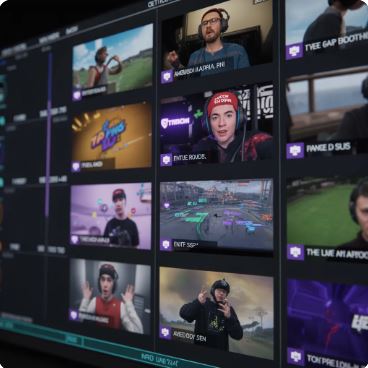
Using Twitch clips removes that friction. The material already exists. It’s easy to find. And it’s often perfectly suited for the moment. Many creators browse Twitch clip archives looking for reaction moments that match the tone of their video.
- A shocked reaction
- A celebratory moment
- A ridiculous gaming failure
Insert the clip. Trim it to two seconds. Move on.
Production becomes faster. However, that is not all of the story. This is another reason why it works well. Twitch clips carry built-in cultural recognition.
Many viewers recognize the streamers or the context, which adds an extra layer of humor.
The Meme Layer of Twitch B-Roll
Internet culture thrives on shared references. A reaction clip from a famous streamer can instantly trigger recognition.
Viewers think: “Oh, I’ve seen that moment before.”
That familiarity adds a meme-like effect. Instead of feeling like stock footage, the clip feels like a cultural reference. And cultural references travel extremely well across platforms.
TikTok, YouTube Shorts, and Twitter all thrive on this kind of shared visual language. Twitch clips simply feed that ecosystem. They’re raw material for memes.
When B-Roll Becomes the Hook
Here’s a surprising twist. Sometimes, the Twitch clip isn’t just supporting the video. It becomes the main attraction.
Creators often open with a chaotic Twitch clip before introducing their topic. The clip acts as the hook. The viewer sees a dramatic reaction and immediately wants to know what happened, and then the creator explains. This structure flips traditional storytelling.
Instead of building toward a climax, the video starts with one. Short-form algorithms love this structure. The first two seconds determine whether someone keeps watching. A loud reaction clip accomplishes that instantly.
The Editing Simplicity Behind the Trend
Another reason Twitch clips work so well as B-roll is technical simplicity. Clips are already formatted in a way that fits social media editing workflows. They’re short, punchy, and usually contain a clear beginning and end.
Editors can drop them directly into a timeline. Minimal trimming required. Compare that to long-form footage that requires careful cutting. Twitch clips arrive pre-compressed into highlight moments, which saves time.
And in fast-moving content production environments, saving time matters. A lot.
Ethical and Copyright Considerations
Of course, the growing use of Twitch clips raises important questions. Content ownership isn’t always clear. Clips originate from streamers, but viewers often create and share them. When those clips spread across platforms, attribution sometimes disappears.
Responsible creators try to credit the original streamer when possible. Some even link back to the source channel. This maintains goodwill in creator communities, and it encourages collaboration rather than exploitation.
The wider debate on the use of clips is still developing across platforms. But for now, Twitch clips remain one of the most widely shared pieces of livestream culture online.
The Future of Modular Content
The rise of Twitch clips as B-roll reveals something larger about the future of digital media. Content is becoming modular. Instead of producing one finished piece of media, creators produce moments. Those moments move across platforms. They get remixed, reframed, and recontextualized.
A livestream generates highlights. Highlights become clips. Clips become reactions. Reactions become commentary videos. And suddenly, a five-second moment becomes part of dozens of new narratives.
This modular system dramatically increases the lifespan of content. A single event can fuel weeks of new media, and that’s a powerful shift in the economics of online attention.
Conclusion
At first glance, Twitch clips appearing in TikTok and YouTube videos look like simple reaction inserts. Quick laughs. Short interruptions. But underneath the surface, they reveal something much bigger. They show how modern creators build stories using fragments of existing media.
Twitch clips provide emotion, pacing, and cultural references in a format perfectly suited for short-form platforms. They compress storytelling into a few seconds while keeping viewers engaged through constant visual change. And that’s the real insight.
In today’s creator economy, content rarely lives on just one platform. It moves. It evolves. It gets reshaped into new contexts. A moment from a livestream becomes B-roll. B-roll becomes narrative.
And sometimes, that tiny clip ends up carrying the emotional weight of the entire video. Not bad for three seconds of chaos.